
CRM Software for Small Business
CRM for small business means one place for customers, contacts, and history—without enterprise complexity. In PrimeBase, your customer list connects to invoices, projects, and payments so you can run the full workflow from first contact to delivery. Unlike sales-only CRMs, PrimeBase keeps customers and vendors in the same system, so small teams get clarity without switching tools.
Start managing customers in PrimeBaseSee it in action
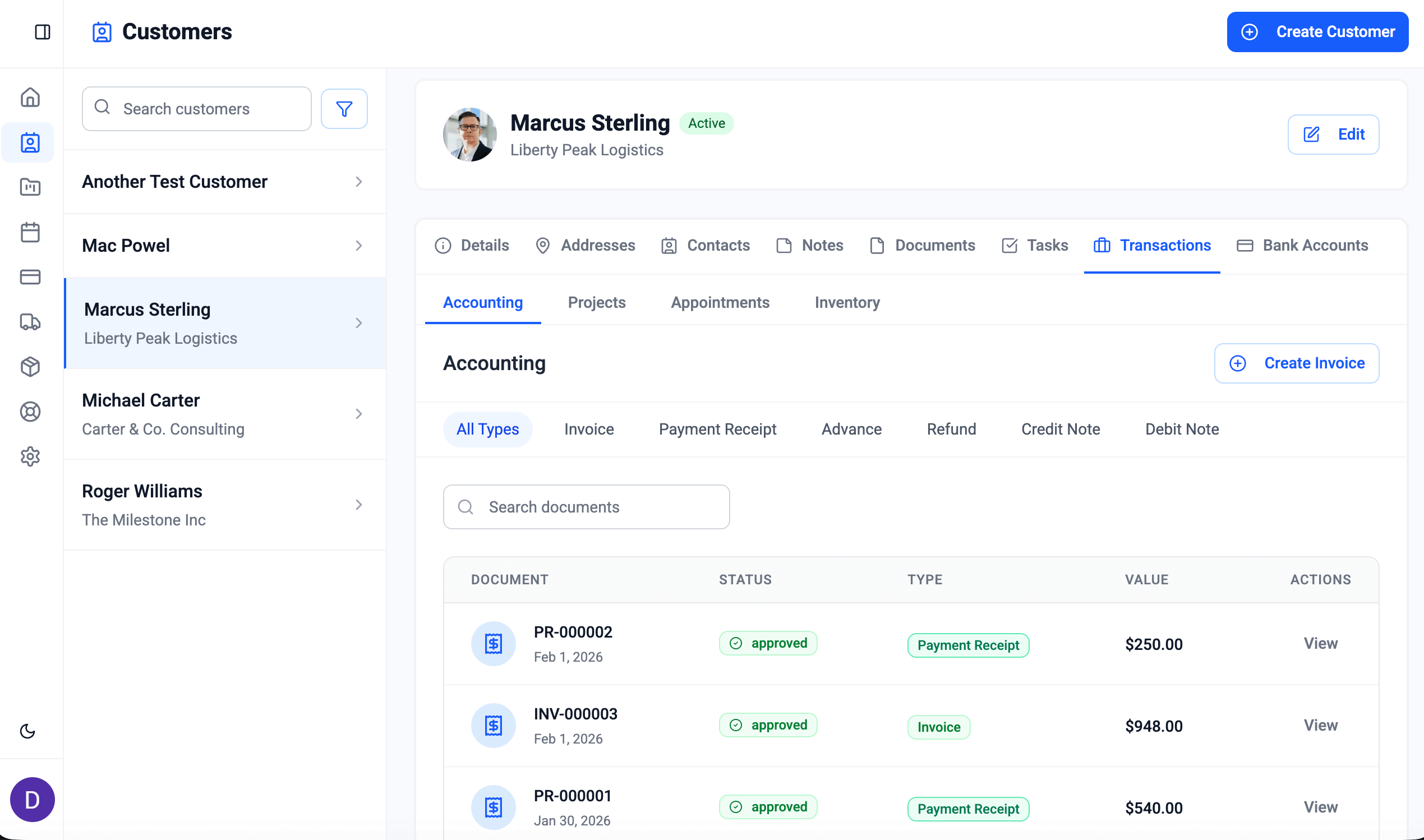
What CRM means for small teams
For small teams, CRM is the hub for who you work with: customers and vendors. PrimeBase gives you a single customer record that links to every invoice, project, and task. When you create an invoice, it ties to the customer; when you run a project, costs and time roll up. That connection is what makes CRM useful beyond pipeline tracking.
Customers and vendors in one system
You pay vendors and get paid by customers. PrimeBase holds both in one workspace: vendor ledger, bills, and credits alongside customer invoices and payments. No need to jump between a CRM and accounting—your team sees the full picture from one place.
Why PrimeBase is not a sales-only CRM
Sales CRMs focus on leads and deals. PrimeBase focuses on delivery: once the deal is won, you need projects, invoices, and documents in one place. We built CRM for teams that do the work, not just the pitch—so you can manage customers and vendors, track projects, and get paid without leaving the app.
What you get in PrimeBase CRM
Each customer record holds name, business name, email, phone, status (lead, active, inactive), tags, and country, timezone, and currency. You can add billing and shipping addresses, notes and activity history, and assign team members. Customers link directly to projects, invoices, and appointments—so your customer database software stays at the centre of your workflow. No duplicate entry: create an invoice from the customer or project, and it’s already linked.
Related solutions
Go deeper with these workflows: